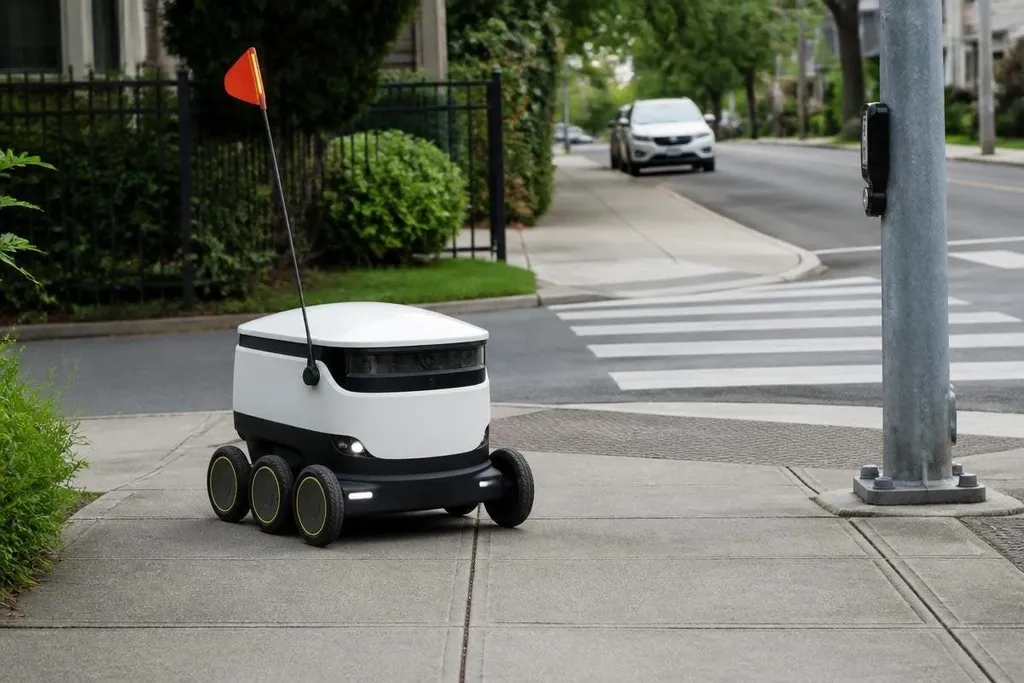
A last-mile robot carries a small order between a local hub and a nearby home, usually along sidewalks and crossings. The value is clear: fewer van trips for small deliveries. The hard part is making that trip safe, legal, and useful when people, bikes, pets, and blocked paths enter the route.
- Short routes suit low-speed delivery robots
- Remote staff may still handle unusual situations
- Access rules and sidewalk design can decide the result
Where the robots help
A delivery robot works best when the task is repetitive and the route is short. It can leave a store, follow a mapped sidewalk, wait at a crossing, and reach a customer without sending a driver for one small package.
That can cut the number of short vehicle trips around a store or local depot. It also gives delivery firms another way to move food, groceries, or parcels during busy periods, when van access is slow or parking is limited.
The robot's storage box adds a practical limit. A small compartment may suit a meal or a few grocery items, but it won't replace a van for a large household order. The useful question is the order size, route length, and number of stops the robot can handle in one run.
How the machines handle a route
Most sidewalk robots combine cameras, other sensors, location data, and route maps. Some systems use LiDAR, which measures distance with pulses of light. The control software uses those inputs to detect people, curbs, parked objects, and changes in the path.
A remote operator may watch the route and help when the robot meets a blocked sidewalk or a crossing it cannot read with enough confidence.
That person can guide the machine through a difficult spot, but the need for remote help adds staff cost and creates a limit on how many robots one operator can supervise.
The robot also needs a safe way to stop. A low-speed machine can still block a narrow path, roll into a road, or surprise someone leaving a building. Route design must cover these cases before a pilot starts.
A public-street pilot needs more than a route map; it needs a record of how the robot handles blocked paths and failed handoffs. Last-mile robotics reporting can put those field details beside the machine, so the risks that follow start with a real test rather than a product claim.
The risks that need a plan
Sidewalk access is the first test. A robot needs enough room to pass people and wheelchairs, yet many sidewalks contain signs, bins, parked bikes, tree roots, and temporary work areas. A route that works on a clear map can fail when the pavement changes after rain or construction.
Safety rules also need clear ownership. The operator, delivery company, property owner, and local authority may each control part of the route. If a robot damages property, blocks access, or causes a collision, a pilot needs a named process for reporting and fixing the problem.
Security matters too. The storage box can carry food or parcels, while cameras may record public spaces. Operators need rules for access, data storage, and the point where a customer takes the order. A locked box solves one problem but can add time at the door.
Weather and battery life set further limits. Rain can affect sensors, ice can reduce traction, and a route that is safe in daylight may need a different plan after dark. Claims about low delivery cost should include charging, cleaning, repairs, remote staff, insurance, and local permits.
A practical pilot check
A small pilot should answer the questions that a product demo leaves open. Use this checklist before buying a fleet:
- Map the route: mark crossings, narrow paths, slopes, road edges, and places where access changes.
- Set the load: record the box size, weight limit, temperature needs, and handoff method for each order type.
- Test help rates: count how often a remote operator must intervene and how long each case takes.
- Check public access: confirm rules for sidewalks, crossings, cameras, parking, and emergency stops.
- Price the full run: include staff, power, repairs, insurance, permits, and failed deliveries.
- Define the stop rule: pause the pilot when a safety event, blocked route, or repeated handoff failure crosses a set limit.
I'd support last-mile robots on controlled routes where the operator can explain every stop and every handoff.
The next useful result is not a polished video. It's a dated route record showing delivery time, remote interventions, blocked paths, failed handoffs, and safety events across normal working days.